In infertility problems, there are some treatment methods other than in vitro fertilization that have a limited probability of success and can be applied to selected patient groups.
1-Especially in patients with polycystic ovary syndrome who only have ovulation problems, developing and cracking eggs and having planned intercourse,
2- In patients with mild male factor and ovulation problems, ovulation is induced and the washed sperm is injected into the uterus (Intrauterine sperm injection-IUI). However, it should be known that the success rates expected in these methods are too low to be compared to in vitro fertilization.
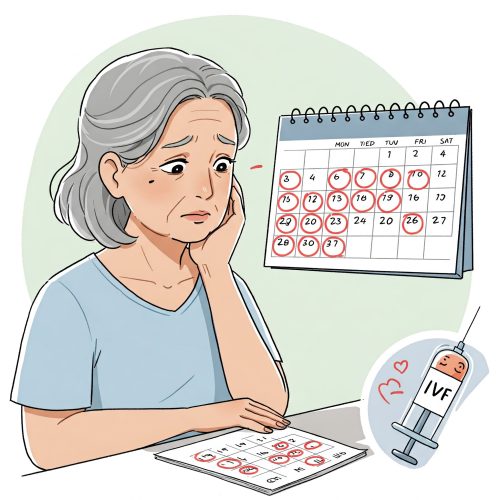
If pregnancy cannot be achieved after 6 months of unprotected intercourse over the age of 35 or 3 months of unprotected intercourse over the age of 40; a physician experienced in the field of infertility should definitely be consulted; it is very important not to delay, especially when it comes to women aged 38 and over with low egg reserve; and not to waste too much time with methods other than IVF. Because the success of IVF treatment starts to decrease significantly especially after the age of 38, and it decreases significantly every year after the age of 40.
Especially if pregnancy is not achieved within 3 months with regular intercourse at the age of 40 and above, it would not be a wrong approach to prefer IVF treatment directly. Because when a woman gets older, especially over the age of 40, the IVF success rate decreases significantly every year, regardless of the number of eggs and ovarian reserve, only in relation to the woman’s age, for all clinics. It is beneficial for patients in this group, namely women with advanced female age and low egg reserve, and in addition to these, patients with unsuccessful attempts and recurrent miscarriages to receive treatment in expert clinics.
It is thought that the reasons why treatment success is affected by increasing female age are damage to egg cell genetics and a decrease in energy organelles called mitochondria.
For men, age is not as critical as for women, but it can be affected from the age of 50 onwards.